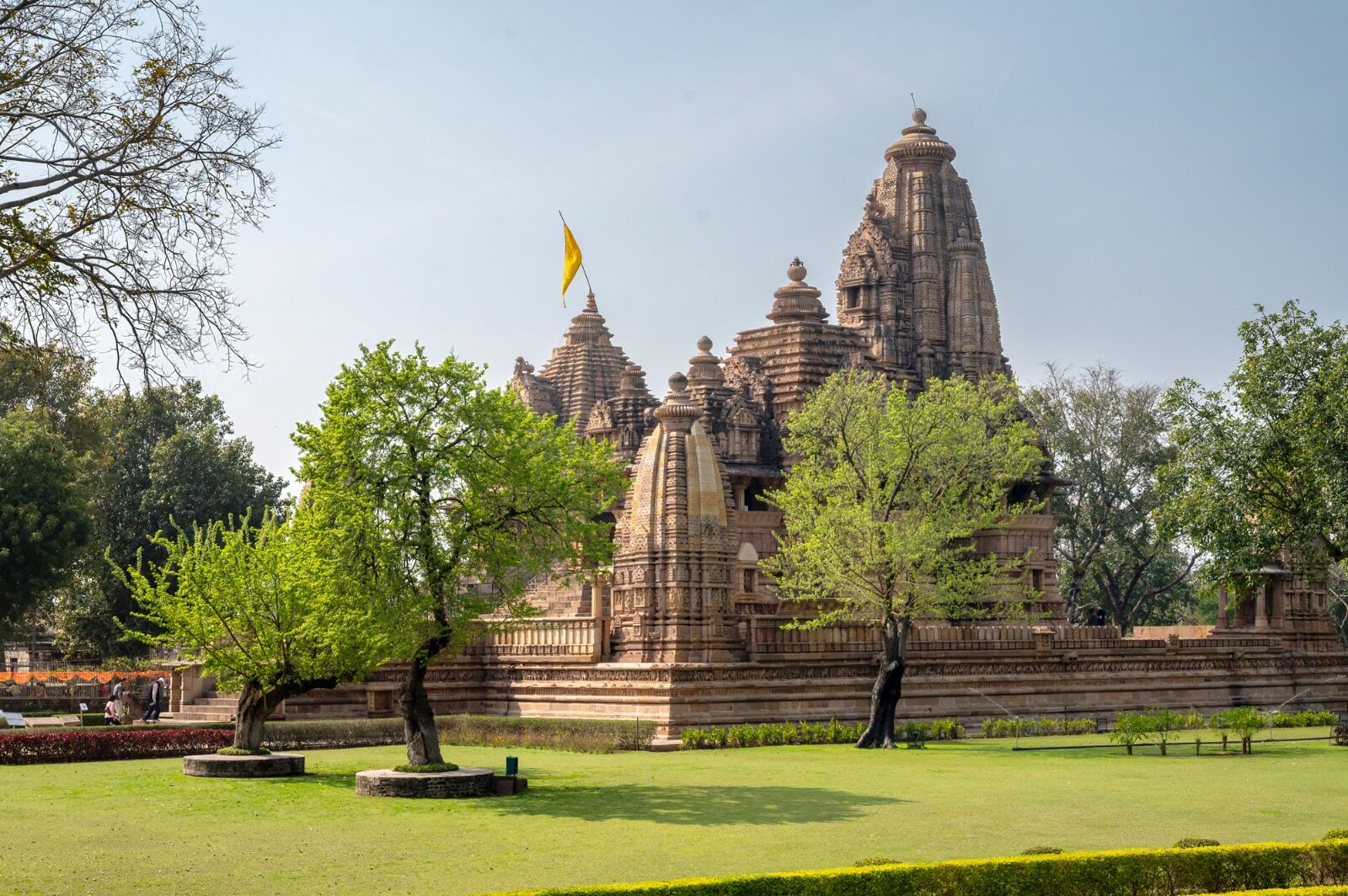
Lakshmana Temple, Western Group, Khajuraho, Madhya Pradesh, India

he Khajuraho temples were built during the rule of the Chandela dynatsy. Temple inscriptions suggest that many of the sruviving temples were built between 970 and 1030 CE. The site of the temples is about 35 miles from the medieval city of Mahoba, the capital of the Chandela Dynasty. The temples were actively used until the end of the 12th century until the army of Delhi Sultanate, the muslim Sultan Qutb-ud-din Aibak, attacked and seized the Chandela kingdom. This area of India was then controlled by various Muslim dynasties from the 13th century to the 18th century and during this period some temples were desecrated and left in neglect. The remoteness and isolation off Khajuraho protected the Hindu and Jain temples and over the centuries they were shrouded by forests. The temples are clustered near water, a feature typical of Hindu temples, as is the fact that all but one, Chaturbhuja face the sunrise.
The temples have a rich display of intricately carved statues and reliefs. they are famous for their erotic sculptures but sexual themes cover less than 10% of the temple sculptures. The sculptures cover various aspects of life. Just behind the Lakshmana Temple can be seen the Matangeswara Temple, and the flag on the top of the temple indicates that this is currently used as a place of worship.

Ref: _AG20685.jpg